Authenticity After AI: Trust, Navigation, and the Currency of Signature
1) We used to navigate fields for food. Now we navigate fields for trust.
For most of human history, “navigation” was physical. You moved through a real landscape to find what you needed—food, safety, shelter, tribe.
Today we navigate a different field: an endlessly expanding digital and semi-virtual world where resources and opportunities appear through the web, social media, and AI-mediated spaces. This field grows every day. And unlike the physical world, it is mixed and uncertain.
You don’t simply meet “things.” You meet:
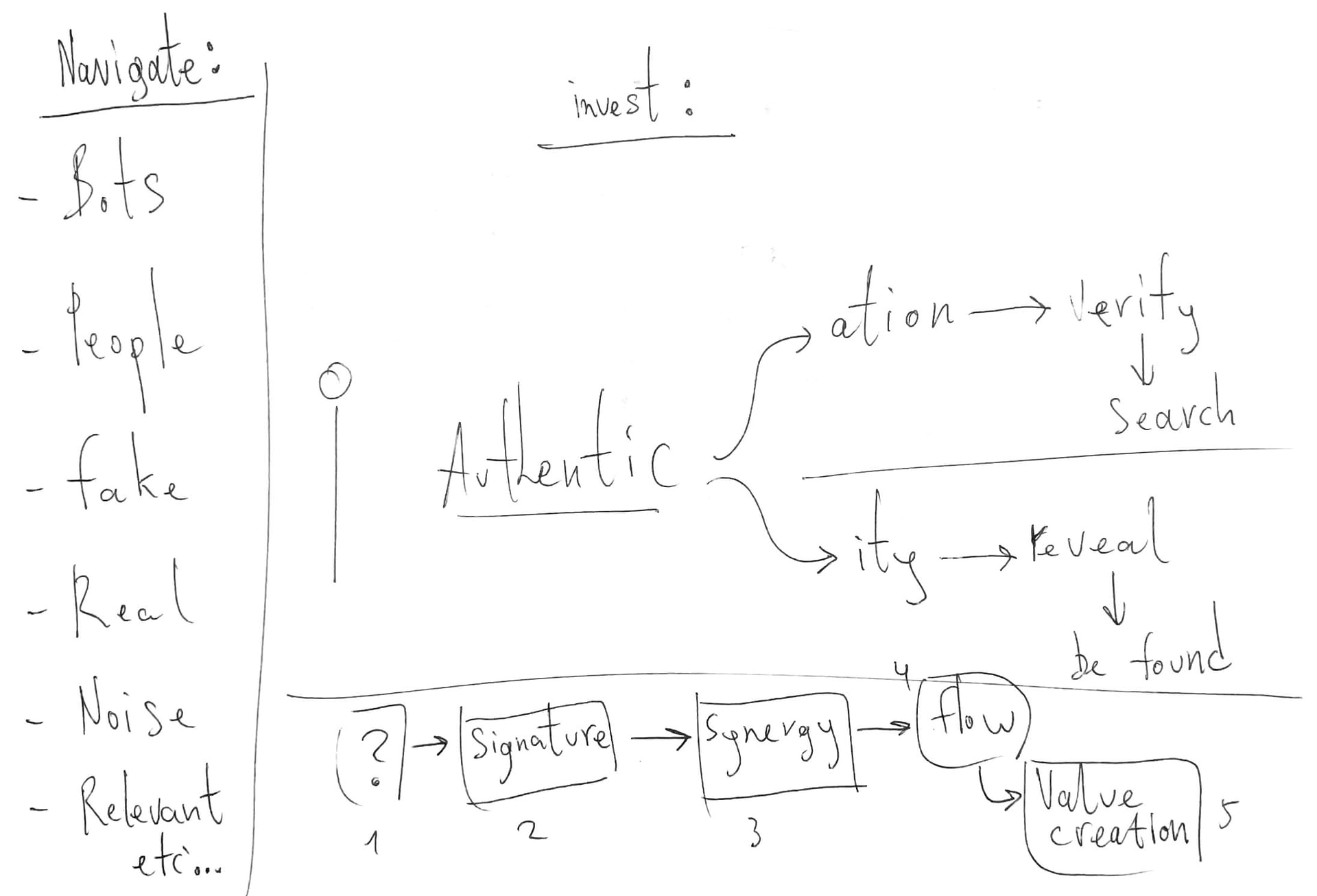
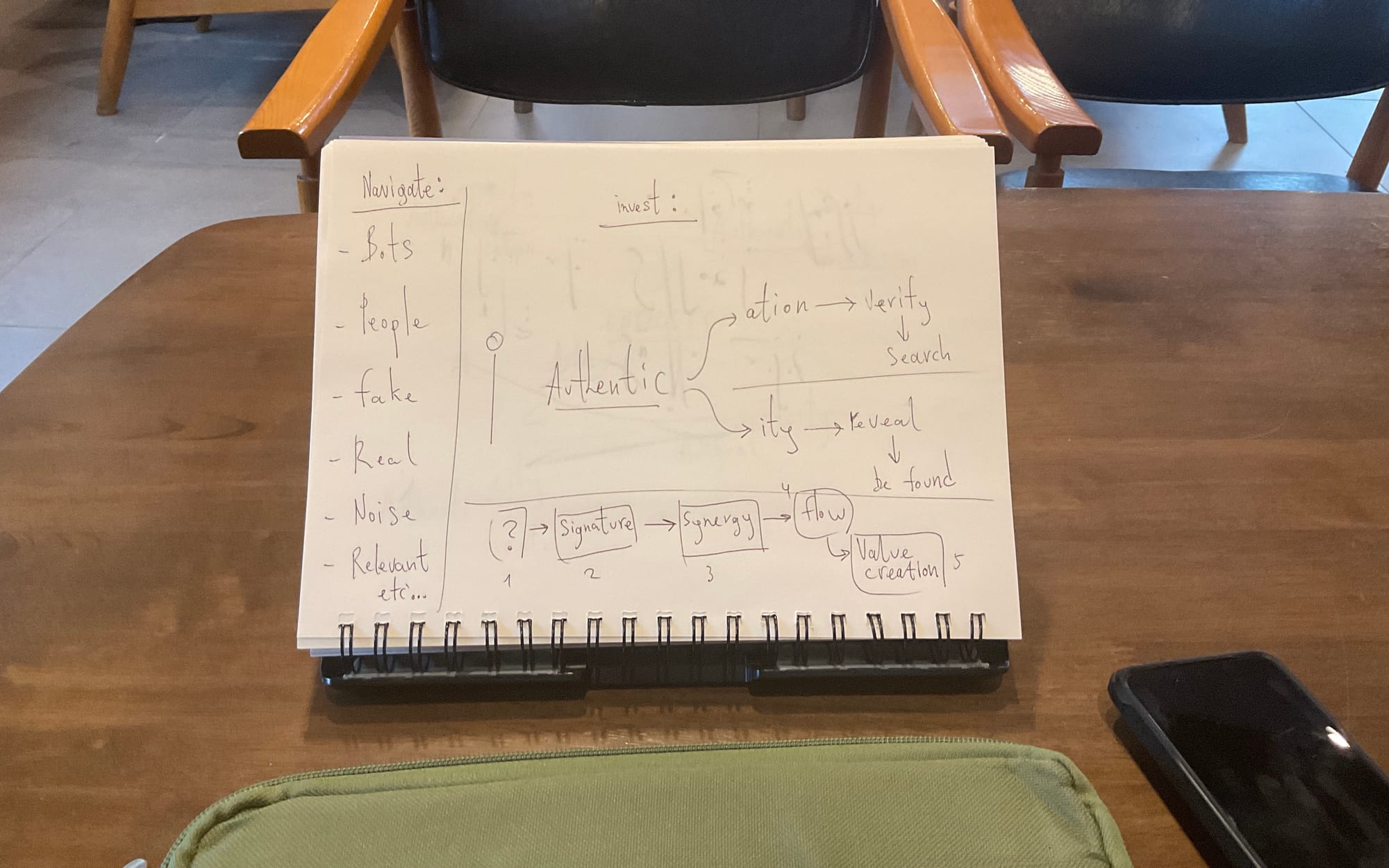
- bots and people
- fake and real
- noise and relevance
- “etc…”
So the central problem is not access to information. It is navigation under uncertainty.
And the question beneath it is the question of our era:
What can be trusted?
2) “Invest” is not only money. It is where you place your life-energy.
In this field, you are investing constantly—whether you notice it or not.
You invest attention. Time. Trust. Learning energy. Collaboration. Commitment.
Because the field is uncertain, the question becomes practical:
What is worthy of my investment when I cannot reliably tell what is real, relevant, or trustworthy?
This is the core: trust is not an abstract virtue. Trust determines where your life goes.
3) Why we must split authenticity from authentication
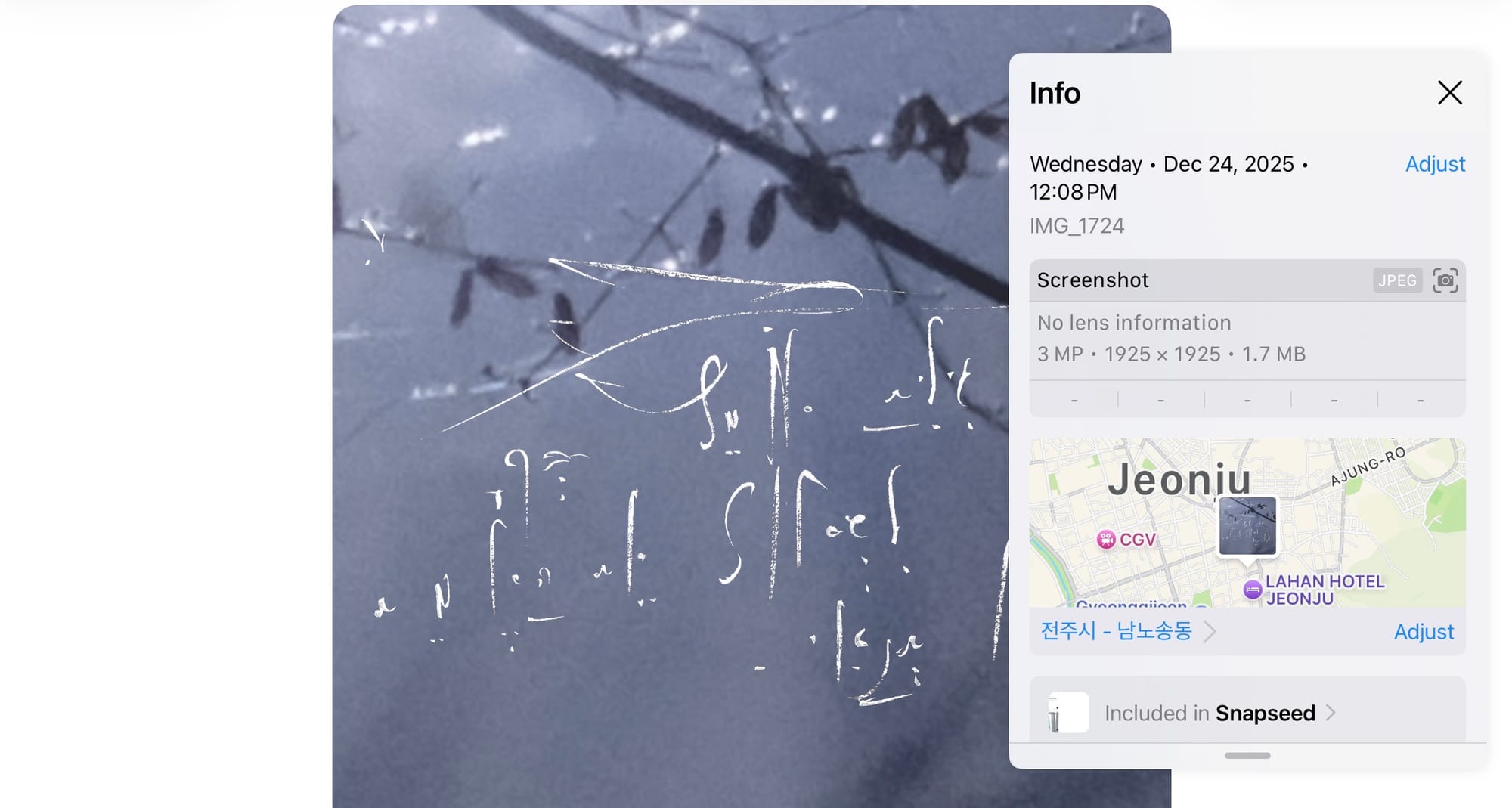
Most people treat “authenticity” as a single vague idea. But as I pointed in the sketch I suggest to separate it to two different movements:
Authenticity → reveal → be found
Authenticity is the inner condition and practice of being and creating from what is truly yours—not a mask, not a performed character, not a borrowed posture. When you are authentic, you reveal your real shape. And because you reveal, you can be found—by the people, opportunities, and resources that fit you.
Authentication → verify → search
Authentication is the field’s need: to verify what it meets so it can decide what to trust, pursue, and invest in. Authentication enables real selection in a chaotic environment.
This split matters because it keeps the structure clean:
- Authenticity is about origination from a real source.
- Authentication is about the world’s ability to recognize and trust what it meets.
They are different—and they support each other.
4) The deeper trust problem: not “human vs AI,” but “originated vs not”
Even if we verify that something came from a real person, the deeper trust question remains:
Did this person originate something authentic and original—or did they copy, patch, imitate, or outsource the origin?
Because “slop” is not only AI slop. There is also human slop: repetition, imitation, trend-chasing, and performed output.
So the trust crisis is not solved by proving identity alone. It is solved by origination.
And that returns the problem to the most important level:
Can I trust myself to originate?
Can I begin from the real “?”—from not knowing, from the empty line—again and again?
This is also where AI’s role becomes clear: AI can be a tool, but it is not the source of the authentic question. When origin is outsourced, trust weakens—because the human becomes an adapter rather than a source.
5) The five-step chain: how authenticity becomes trustable
The original sketch (photo above) ends with a simple sequence:
- ?
- Signature
- Synergy
- Flow
- Value creation
This is not a motivational ladder. It is a trust engine.
1) ? — the origin point
The question mark is the beginning. It represents not knowing, the authentic question, the empty line before anything is manufactured. This is where originality starts.
2) Signature — what forms over time
Signature is not data. It is not a brand. It is the living coherence that forms when a person returns to “?” repeatedly over time.
This is crucial for trust: if a person has been creating and publishing for years, a signature forms—style, philosophy, conceptual moves, patterns of attention. That makes it possible to test whether new work belongs to that signature or is imitation.
Signature is how authenticity becomes legible.
3) Synergy — the right fit
Synergy is the meeting between signature and field: the right opportunities, the right resources, the right people. Not “everyone,” not “maximum reach”—the match that fits.
4) Flow — less character management
Flow here means: when you are not switching masks and playing games, you move naturally. Less friction, less performance overhead, more direct creation.
5) Value creation — outputs that carry the signature
Value creation is what the field can actually invest in. And when value is created from authentic origin, it carries the signature forward.
This is the loop implied in the sketch:
Authenticity builds signature → signature enables trust and fit → fit enables flow → flow yields value → value carries signature further.
6) Why authenticity as a signature becomes the future currency
As the world becomes more artificial and more saturated, the need for authentication rises. But the deepest authentication is not only “is this a real person?” It is:
Is this a real signature of origination?
That is why investing in authenticity matters. Over time it produces something that cannot be cheaply manufactured at scale:
- continuity
- coherence
- a recognizable signature that can be tested against itself
This is how trust becomes possible in the new field.
7) The future of discovery: signature-to-signature
When the field is flooded, shallow signals become less useful: categories, status ladders, institutional filters, surface performance.
What becomes meaningful is signature-to-signature connection:
- coherent creators finding coherent creators
- authentic opportunities and resources connecting to authentic signatures
- trust grounded in continuity, not ranking
This is a different kind of search: not searching by labels, but by coherence.
Closing
We are entering a world where outputs are abundant and cheap. Trust will be anchored in what is rare:
origination—and the living signature that proves it over time.
So the practical directive is simple and complete:
Navigate the chaotic field.
Invest wisely.
Build authenticity so you can be found.
Build authentication so trust is possible.
And let this be your repeatable engine:
? → signature → synergy → flow → value creation
Because in the end game, the coin is not status.
The coin is a signature that can be trusted.
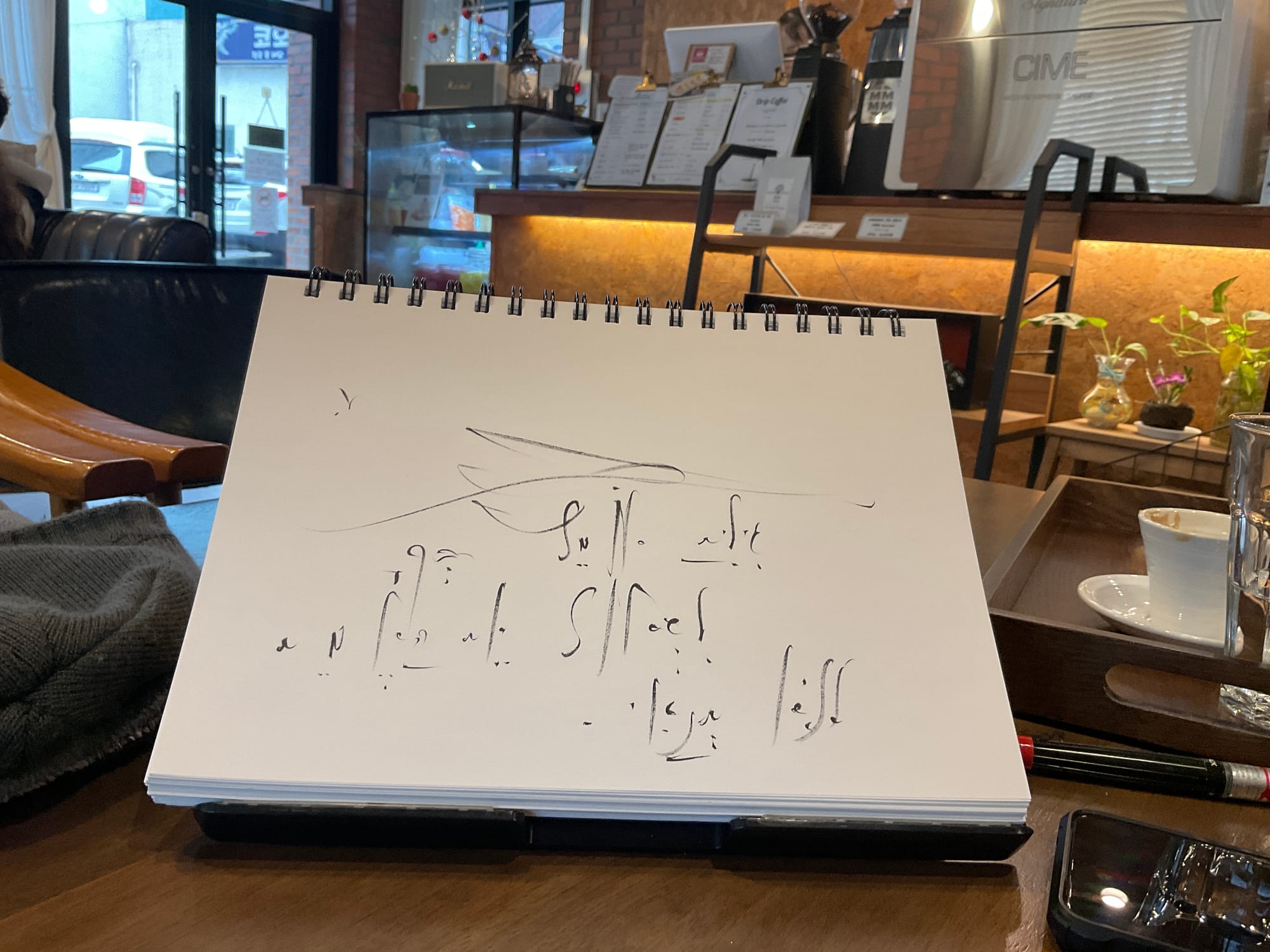

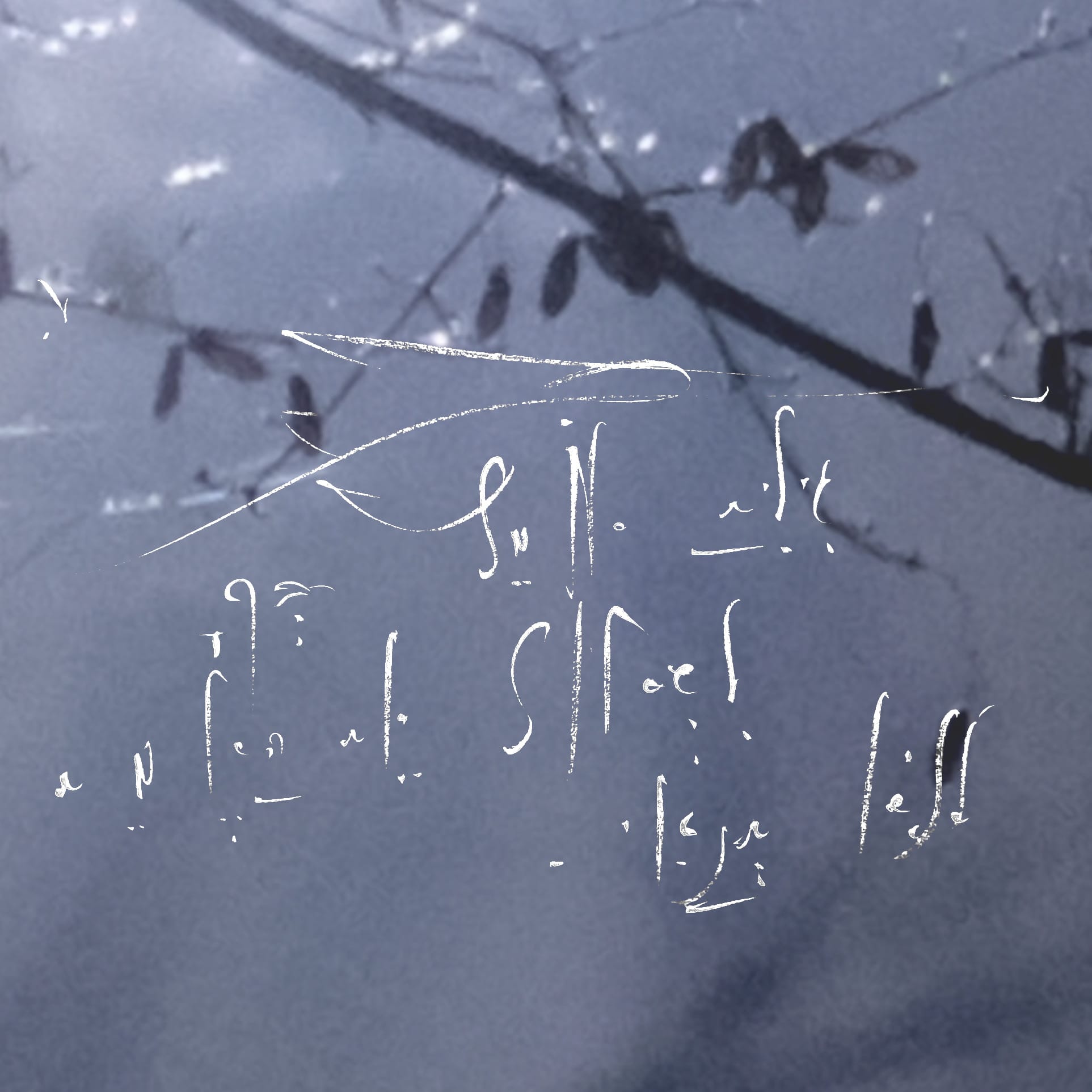
You found within yourself the courage to ask for truth without conditions.
 Bandcamp New & Notable Apr 5, 2023