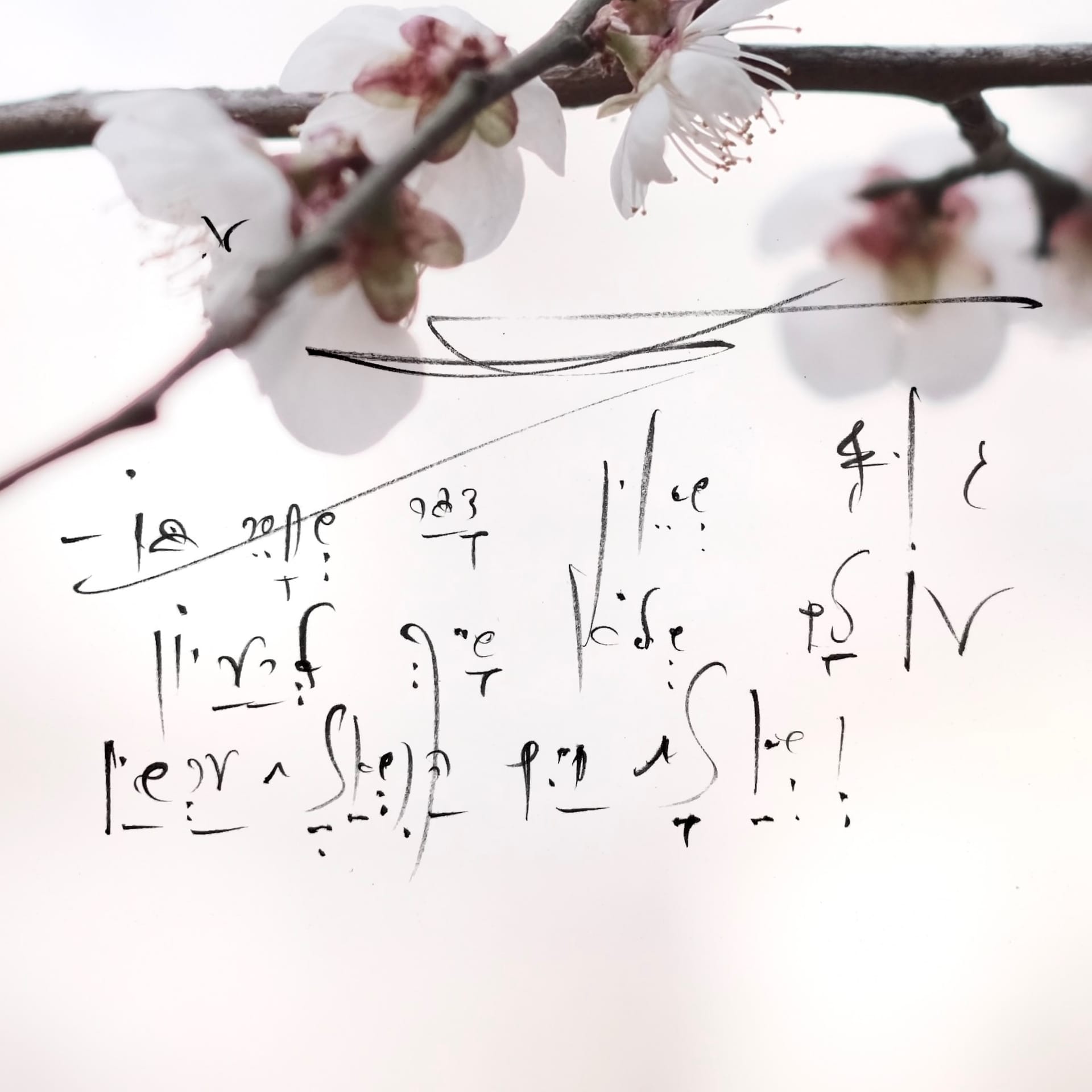
Original recording: https://voicenotes.com/s/ny7Fcw
If you are honest in your inquiry, you see that the only question is the question of the start. Any question beyond that is a question of knowledge—and the knowledge question itself is thought, thinking itself.
There is no true creation, there is no newness, there is no purity in any exploration, in any inquiry, in any revelation, in any research, other than the question of the start. The question of the start is so pure that it can never be captured, defined, answered, or named. It is the quality of pre-perception, pre-recording, pre-knowing.
And it is not a capacity that you put in place. It is not a capacity that you grow in you. It is not a capacity that you activate. It is prior to you in the sense of your understanding, yet it is your very capacity to understand. To truly understand means to truly question without end.
And not serial questioning. Not the infinity of questioning—meaning the machine produces more and more questions, answers them, and moves on to more and more questions. That is the act of knowledge. It is when the questions dissolve that what stays has the nature of questioning itself, of not knowing itself—not an end, but a start.
The end of knowing is the start of questioning. The start of questioning can never grow knowledge on it. It has nothing of value to the knowledge machine. It is not a tactic to generate novelty.
It is that which cannot be consumed by the mind, by the activities of the mind, by the thinking machine.
No amount of books, no amount of articles, no amount of innovation in the world can even begin to comprehend the quality of openness of a not-knowing mind, which is totally different from the knowing mind.
And the word “mind” is just there to convey the paradox. But can you really tell what is a mind not full of knowing, not thinking itself to be, but before thoughts even form? Can you tell? Who will tell?
The thinker—which is itself a thought, a compilation, a mosaic of thinking—you will probably not touch that, as I will never touch that, as anyone ever touched that. But there is the question itself.
That is real, and it demands itself to be asked. I do not demand it from myself; you cannot demand it from yourself. Give your heart to that question that can never be asked by you, and let it empty all your fake questions, all your knowledge about inquiry, all your desires for freedom from the known.
Then, naked from all that, the question is asked—not by you—and your heart shines in that. Your happiness is in that, not in your knowing of not knowing. Let the unknown tell you:
What is the quality of questioning that doesn’t come from the known?